Course: Genocide and Group Hostility
Module 1: Genocide
How is genocide defined in international law, and what distinguishes genocide from other mass atrocities?
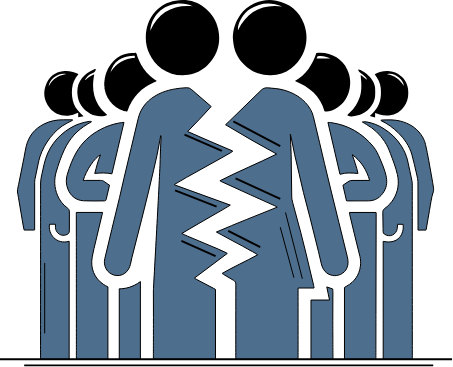
Genocides differ significantly in their political contexts, distinctive characteristics, and the scale of violence. Nevertheless, they also share certain common features that define the phenomenon. The formulations and established interpretation of the UN Genocide Convention will serve as a basis for discussion.
What is Genocide?
How is genocide defined in international law? What distinguishes the legal definition of genocide from non-legal definitions?
“…acts committed with intent to destroy, in whole or in part, a national, ethnical, racial or religious group, as such”
According to the legal definition of the crime, intent (dolus specialis) is central to identifying genocide. Without proof of the intent to destroy a group “in whole or in part” solely because of their identity, the acts of deliberate mass violence in question often fall under crimes against humanity.
According to the 1948 UN Genocide Convention, “genocide” refers to specific acts committed with the intent to destroy, in whole or in part, a religious, national, racial or ethnic group or groups. As an international crime, signatory nations agreed to “undertake to prevent and punish genocide”. Acts that constitute genocide are specified by the Genocide Convention and replicated without amendment in the statutes of ad hoc and hybrid international criminal tribunals, including the Rome Statute of the International Criminal Court. They are as follows:
- Killing members of the group
- Causing serious bodily or mental harm to members of the group
- Deliberately inflicting on the group conditions of life calculated to bring about its physical destruction in whole or in part
- Imposing measures intended to prevent births within the group
According to the legal definition of the crime, intent is central to identifying genocide. Without proof of the intent to destroy a group “in whole or in part” solely because of their identity, the acts of mass violence in question may constitute crimes against humanity and/or war crimes, if the requirements for commission of those crime are met.
For further information about Lemkin’s original definition of the crime of genocide, check out David Crowe’s discussion on the topic (part of a larger symposium on the Roma genocide during WW2).
There have been many alternative definitions of genocide proposed throughout the years (here is a list of some popular ones). They can mainly be distinguished between legal, sociological, political, and popular definitions, according to genocide scholar Ernesto Verdeja. In short:
- The international Genocide Convention contains the legal definition of the crime, adopted in the aftermath of the Holocaust. Major powers that negotiated the draft convention in the United Nations aimed to prevent such atrocities from recurring while deferring scrutiny from the treatment of minority groups in their own countries. Because of realpolitik, the wording of the convention is rather restrictive
- Sociological definitions of genocides are generally broader, covering targeted groups beyond the few outlined in Article II of the convention. For example, such definitions may expand the possible genocidal acts to include destruction of the cultural or religious property (“cultural genocide”). Such definitions also have less emphasis on the strict legal requirement of the Genocide convention to prove genocidal intent
- Political definitions are used to rally consensus and encourage specific responses, often with the goal of prevention or intervention. Verdeja states that “many international organizations and governments will use the term genocide when what they really mean is large-scale violence against civilians”
- Popular definitions often incorporate the emotional response to mass violence. When acts of violence are committed, the public tends to highlight their reprehensibility and immorality, calling for intervention so that the violence can be stopped
The term Holocaust refers to the systematic mass murder of European Jews by Nazi Germany during World War II (1939–1945).
In line with the Nazi racial ideology, the Wannsee Conference in 1942 coordinated the implementation of the “Final Solution of the Jewish Question,” meaning the extermination of the Jewish people and their culture in Europe and beyond.
Approximately six million Jews were murdered in a systematic, bureaucratic, and industrially executed genocide. During the Nazi rule in Germany and the Second World War, other groups were also targeted for persecution and extermination, including Polish and Slavic people, Roma people, and individuals with disabilities.
To learn more about the Holocaust, see, for instance, these resources by the US Holocaust Memorial Museum.
Genocide & Other Mass Atrocities
Under international law and as defined by the Rome Statute of the International Criminal Court (1998), mass atrocities occur in the form of genocide, crimes against humanity, and/or war crimes. Additionally, the term “ethnic cleansing”, while not a recognised crime in international law, is often used to describe situations of mass atrocity. What makes genocide distinct from the other categories of mass atrocities?
It’s important to mention that not all killing or military intervention against civilians are considered atrocities, as the use of force is normalized and legalized through the rules of war. However, international law sets limits to what actions are legitimate even during war.
According to the Rome Statute of the ICC, atrocity crimes threaten the peace, security and well-being of the world, and concern the international community as a whole. The ICC does not establish a hierarchy between the various atrocity crimes.
- Crimes against humanity
Crimes against humanity include known acts “committed as part of a widespread or systematic attack directed against any civilian population”. The underlying crimes are set out in Article 7 of the Rome Statute and including crimes such as murder, enslavement, deportation, torture, rape and other forms of sexual violence, enslavement, apartheid, and persecution. Most atrocities, if committed against members of a protected group, with intent to destroy that group, could amount to genocide. This is perhaps most visible with the crime against humanity of persecution, also an identity-based crime.
- War crimes
War crimes are violations of the laws and customs applicable in international armed conflict, such as breaches of the Geneva Conventions of 12 August 1949, that give rise to criminal liability. Individual responsibility for war crimes can be established if violations against members of a group take place in the context of and are associated with an (international or non-international) armed conflict, regardless of whether the victims are actively participating in hostilities or not.
While not recognized as an independent crime under international law, ethnic cleansing is considered to include coercive practices meant to render an area ethnically homogeneous by removing members of ethnic or religious groups. If the necessary criteria are met, these acts may amount to one of the recognized atrocity crimes. The Responsibility to Protect (R2P) norm, spelling out the normative responsibility to protect people from atrocities and prevent them, expanded the concept of ‘atrocity crimes’ to include ethnic cleansing in the 2005 World Summit Outcome Document.
International law are rules that states develop to commit themselves to certain norms to protect their citizens and/or to regulate the affairs and relationship between states. They cover a number of legal fields, including human rights law, humanitarian law, and international criminal law.
The normative basis of international human rights law is the 1948 UN Universal Declaration of Human Rights and subsequent conventions that translated its principles into binding obligations and expanded on them. These international treaties are binding on all states that have signed and ratified them, which includes most UN member states. International institutions have been established with the mandate to monitor the implementation of these norms at the state level, such as the UN Human Rights Committee.
Humanitarian law is a branch of international law. Its overall aim is to limit the sufferings during war. It protects people not taking part in the fighting (civilians, medics, aid workers) and those soldiers who can no longer fight (wounded, sick and shipwrecked troops, prisoners of war). Grave violations of these rules are “war crimes”. The legal foundation of IHL include the four Geneva Conventions of 1949, and their two additional protocols of 1978. Violations of international humanitarian law that attract criminal liability constitute war crimes. War crimes, genocide, and crimes against humanity are among the core crimes for which individuals may be investigated and prosecuted under international criminal law.
Today, under international law, two major courts have distinct roles related to genocide and other mass atrocities:
- International Criminal Court (ICC): Established by the Rome Statute (adopted in 1998, entered into force in 2002), the ICC prosecutes individuals for crimes such as genocide, war crimes, and crimes against humanity.
- International Court of Justice (ICJ): The ICJ settles legal disputes between states. The court has special competence to adjudicate in cases about the 1948 Genocide Convention. It does not prosecute individuals but can determine whether a state has violated its binding legal obligations not to commit and to prevent and/or punish the crime of genocide.
To learn more about the differences in the jurisdiction of ICJ and ICC, see here
To learn more about humanitarian law and other parts of international law, see here
To learn more about the system for monitoring the Geneva Conventions and their additional protocols, see here
To learn more about war crimes as defined by humanitarian law, see here
Key Cases
Despite the declarations of “never again” stated by various national and international human rights instruments in the aftermath of the Holocaust and the Second World War, atrocity crimes, including genocides, have been perpetrated globally in numerous conflicts, as well as in peacetime.
Legal prosecution of genocide has happened in the aftermath of mass violence carried out in Rwanda, Bosnia-Herzegovina, and Cambodia, and international courts are currently addressing Myanmar and Israel. Regarding prevention, institutional development has been much slower.
The Srebrenica genocide in Bosnia-Herzegovina
The dissolution of former Yugoslavia in the 1990s resulted in war and widespread mass violence targeting multiple ethnic groups. Much of this violence has since been recognized as atrocity crimes, which in the case of Srebrenica amounted to genocide.
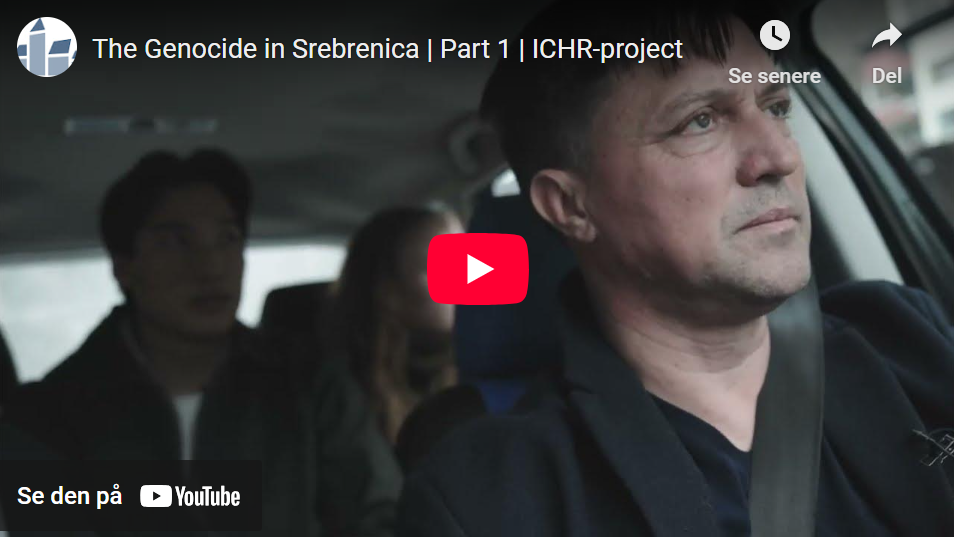
In July 1995, approximately 8,000 Muslim men and boys were systematically massacred by Bosnian-Serbian soldiers in the Bosnian town of Srebrenica. The International Court of Justice in 2007 defined the Srebrenica massacre as a case of genocide, and the International Criminal Tribunal for Yugoslavia (ICTY) later upheld the same view by sentencing several individuals for the genocide in Srebrenica.
In Srebrenica, in July 1995, approximately 8,000 Bosniak (Bosnian Muslims) men and boys were executed within two weeks by Bosnian Serb military forces. The massacre was in line with the political goal of Bosnian Serbs to establish an ethnically and religiously homogeneous national entity in Bosnia.
The Srebrenica massacre was decisive in prompting the NATO intervention, which ultimately resulted in the signing of the 1995 Dayton Peace Agreement, effectively bringing an end to the Bosnian War.
Some segments of the Bosnian Serb and Serbian population, especially some elected officials, do not recognize the events in Srebrenica as genocide, which is reflected, for example, in school curricula.
A peace accord, signed in December 1995 in Dayton, Ohio, ended the Bosnian War and established Bosnia and Herzegovina as a single sovereign state composed of two entities: the Bosniak-Croat Federation and the Bosnian Serb Republic. It created a framework for governance, human rights protection, and the return of displaced persons, while bringing international oversight to ensure post-war stability. The agreement marked a crucial step in ending ethnic conflict and mass violence in the region.
The role of the International Criminal Tribunal for the former Yugoslavia (ICTY) for the prosecution of the mass atrocities in Srebrenica will be discussed further in Module 3 – Restorative Justice.
The Srebrenica-Potocari Memorial Center acts as a place of remembrance for the victims of the genocide in Srebrenica, and it is dedicated to preserving history and combating the ignorance and hatred that make genocide possible.
The Rwanda genocide
The genocide in Rwanda took place between April and June 1994. The Hutu government, representing the majority population in the country, launched a systematic genocide against the minority Tutsi population and moderate Hutus.
In 100 days between April and June 1994, between 500,000 and one million people were systematically murdered. Most victims were Tutsi, but also the minority Twa and politically moderate Hutu became victims of the genocide.
The mass killings were planned and organized by the Hutu-dominated agencies. Many of the perpetrators were ordinary people who killed their friends and neighbours within local communities.
The UN and major Western democracies were heavily criticized for having failed to stop the mass murders. In 2000, the UN Security Council admitted responsibility for not having done so. The UN General Assembly, in 2014, formally classified the Rwandan mass murders as genocide.
The Kigali Genocide Memorial was created to remember the victims of the Rwandan genocide, as well as to challenge the ideas and rhetoric which led to the genocide in the first place. The memorial has become the starting point for peace and values education, since then incorporated in school curricula.
The Yazidi Genocide in Iraq
Genocide presupposes the intent to destroy a racial, religious, ethnic, or national group. The Independent International Commission of Inquiry on Syria (2016) emphasized in the report “They Came to Destroy: ISIS Crimes against the Yazidis” that the so-called Islamic State (ISIS) tried to destroy the Yazidis as a religious group, and has accordingly identified the Yazidis as victims of genocide. Additionally, the US State Department has recognized the attack on the Yazidis as genocide. At the same time, German, Swedish, and Belgian courts have convicted ISIS members of genocide.
On 3rd August 2014, ISIS attacked the Yazidis of the Sinjar region, northern Iraq. The armed group executed thousands of men and adolescent boys, and in some areas women past child-bearing age.
Hundreds of Yazidi infants and the elderly died after having fled to the upper slopes of Mount Sinjar, Women and girls, some scarcely older than nine, were abducted by ISIS before being fold into a system of enslavement where they were beaten, forced to labour, and held in sexual slavery by ISIL fighters. Yazidi boys taken from their mothers, indoctrinated, forced into ISIL training camps, and made to fight. ISIS regards the Yazidis as infidels and devil worshipers who had no place in a truly “Islamic” state, as defined by the group’s ideology.
In the intervening years, there has been a smattering of accountability with ISIS members convicted of genocide in German, Swedish, and Belgians courts. Iraq has passed the Yazidi Survivors Law and implemented a reparations programme. Additionally, a Yazidi Genocide Memorial has been created to remember victims and educate about their experience.
Still, most Yazidi victims and survivors are yet to receive any semblance of justice and still live in displaced persons’ camps in the Kurdistan Region of Iraq. Thousands of Yazidis remain missing, and the process of unearthing the numerous mass graves in Sinjar and identifying victims has been slow and halting.
ISIS is a terrorist group which follows a radical, hybrid form of Salafi jihadism that advocates for a global caliphate and the strict, violent implementation of a self-interpreted version of Sharia law. This ideology is widely condemned by mainstream Muslims and scholars. The group has been declared a terrorist organisation by the United Nations and many other nations. The group was territorially defeated in 2019 on their unrecognised “state” territory inside Syria and Iraq. Fragments of ISIS in Iraq and Syria are still conducting terrorist acts while ISIS affiliates in Asia and Africa continue to operate.
Genocide, a contested concept
In all cases where genocide has been alleged, the concept has been contested. Also, there is a gap between how scholars have studied genocide as a social and historical phenomenon and how lawyers apply the term in a strict legal sense. The legal definition set out in the UN Genocide Convention and interpreted by the ICJ emphasizes the proven intent to commit genocide. Only a few instances of mass violence have ever been identified as genocide by internationally recognized legal bodies.
In recent years, cases like Myanmar, Ukraine, and Gaza have put the limitations of the legal definition under critical scrutiny. The adjudication of these cases by the International Court of Justice and the International Criminal Court will be discussed further in Module 2 – Prevention. An ICJ ruling on a state’s duty to prevent genocide cannot, on its own, be enforced to end genocide. However, we will explore the possible measures taken in response to genocide and other mass atrocities in Module 3 – Restorative Justice.
The case of Rohingyas from Myanmar
In 2019, Gambia accused Myanmar of targeted mass violence against the Rohingya people and requested provisional measures of protection from the ICJ. The ICJ in 2020 ruled that Myanmar should take measures to prevent genocide from happening to the Rohingya. The validity of calling Myanmar’s actions against the Rohingya genocide has been debated.
The Rohingya are an ethnic group native to Myanmar (previously Burma), but since the 1980s, they have been officially labelled as illegal migrants by the Burmese government. The Rohingya have long been subjected to discrimination and persecution.
Following the attacks by Rohingya insurgents on Burmese authorities in late 2016, the Myanmar military and paramilitary groups began a large-scale campaign of killings and rapes.
Mass violence in 2017 forced more than one million Rohingya to the Cox’s Bazaar refugee camp across the border in Bangladesh. In 2018, the UN High Commissioner for Human Rights reported that Myanmar’s government organized and planned the intentional eradication of the Rohingya people, and that its officials could be potentially charged for ethnic cleansing and genocide. As of 2025, more than one million Rohingya refugees continue to reside in Cox’s Bazaar refugee camp, in addition to the numerous Rohingya refugees in other neighbouring countries.
The case of Palestine/Israel
In the years following Hamas’ 7th October 2023 attacks in Israel, Israel’s escalation of mass violence against Palestinians intensified. In late 2023, South Africa alleged that Israel was committing genocide against Palestinians in the Gaza Strip and initiated a case at the International Court of Justice. In January 2024, the ICJ found that there was a risk of genocide in Gaza, and urged Israel to prevent genocide, provide humanitarian aid, and halt incitements to genocide in Israel.
In November 2024, the International Criminal Court (ICC) issued arrest warrants for two Israeli and three Hamas leaders, having confirmed there are reasonable grounds to believe that war crimes and crimes against humanity have been committed. Following the assassination of the three Hamas leaders, the prosecutor’s office terminated its proceedings against them for the 7th October attacks.
The ICC stated in its November 2024 decision:
“With respect to Mohammed Diab Ibrahim Al-Masri, more commonly known as Deif, Commander-in-Chief of the military wing of the Islamic Resistance Movement “Hamas”, known as the Al-Qassam Brigades, the judges of the International Criminal Court have found reasonable grounds to believe that he is responsible for the crimes against humanity of murder, extermination, torture, and rape and other forms of sexual violence; as well as the war crimes of murder, cruel treatment, torture, taking hostages, outrages upon personal dignity, and rape and other forms of sexual violence.
With respect to Israeli Prime Minister Benjamin Netanyahu, and former Israeli Minister of Defence Yoav Gallant, the judges of the International Criminal Court have found that there are reasonable grounds to believe that each has committed the war crime of using starvation as a method of warfare and crimes against humanity of murder, persecution, and other inhumane acts, as a direct perpetrator, acting jointly with others. The Chamber also found reasonable grounds to believe that they are each responsible for the war crime of intentionally directing attacks against civilians as a superior.”
In this interview, professor Dirk Moses discusses the application of the term “genocide” to the mass atrocities happening in Gaza.
In this interview, the historian David Crowe explains Lemkin’s original definition of genocide alongside the definition of the UN Genocide Convention. He then relates this definition to the ongoing debate about the mass atrocities in Gaza.
Mass civilian casualties, starvation, and the destruction of infrastructure in the Gaza Strip have led to numerous debates about whether or not these acts amount to genocide, as well as about the validity of the definition of genocide in the first place. This debate is a current and stark reminder of the contested nature of the genocide term, and the inherent limits in the legal definition of the Genocide Convention (proof of genocidal intent is still a core focus). Contrasting opinions on the definition of genocide and its applicability in Gaza are numerous, with various examples discussed by Alice Speri, Kai Ambos, and Luc Bronner.
Genocide scholar Omer Bartov, for example, repeatedly expressed his evolving opinion on whether a genocide was taking place in the Gaza Strip. As early as 10th November 2023, he warned against the possibility of escalation to genocide, identifying war crimes and crimes against humanity but not yet genocide. Since 13th August 2024 (and again in July 2025), he acknowledged that Israel’s actions amounted to genocide, in light of clear expressions of genocidal intent, rhetoric, and acts. Bartov has, since 2023, received criticism for his opinions, which he discusses in this podcast by the New York Times – as in this NPR interview with John Spencer. This debate shows how genocide is still a contested term.
Other experts in the field have addressed both the importance and limitations of applying the genocide perspective to Gaza, and the broader implications for the genocide studies field (William Schabas, Mari Cohen, Ellen Stensrud). Several UN bodies and human rights groups have investigated the destruction of Gaza. Notably, in September 2025, the UN Independent International Commission of Inquiry on the Occupied Palestinian Territory concluded that Israel had committed genocide in Gaza.
The ICJ genocide case on Gaza is still pending in 2025. However, the ICJ declared that it is legally plausible that the Palestinians are entitled to protection under the Genocide Convention. Similarly, the ICC established in 2024 that there were reasonable grounds to believe that Israeli Prime Minister Netanyahu and Defense Minister Gallant were responsible for war crimes and crimes against humanity in Gaza. In the same statement, the ICC confirmed that Hamas’ 7th October 2023 attacks also constituted war crimes and crimes against humanity.
Gender and Genocide
Gender is not explicitly included in the legal definition of genocide, but it is a crucial factor that can influence the design, commission, and impact of genocide. How does gender impact the selection of a target group in genocide?
The term “gender” denotes the social, cultural, and psychological aspects of one’s identity as opposed to sex, which is considered concretely physical and biological. While it is often used as a buzzword and a synonym for “women” in conflict, security, genocide, and atrocity prevention studies, gender encompasses multiple identities and the socio-cultural system they inhabit.
Women and children affected by genocide - Lamiya's story
Lamiya
Understandings of gender may be woven into the perpetrators’ planning and commission of genocidal acts. It is through these gendered violent acts that perpetrators maximize the crime’s destructive impact on protected groups. During genocide, the violence directed at marginalised genders, including women and girls, may be worsened by existing attitudes in society, magnifying the impacts to which women, girls, and members of the LGBTQI+ communities are subjected.
As many conflicts and cases of mass violence have been affected by gender dynamics, US philosophy professor Mary Anne Warren coined the term “gendercide” in 1985 to refer to the deliberate extermination of persons of a particular gender.
According to Warren, gendered violence and killings can be understood as components of genocidal acts, carried out with the intent to destabilize or eradicate populations. However, the term gendercide applies more broadly and is not confined solely to acts of genocide. Warren’s website, gendercide.org, provides multiple case studies (e.g. Rwanda and Bosnia-Herzegovina) where she argues that “gendercide” has taken place.
Gender-based violence targeting women often includes sexual violence and mass rapes with the goal of forced impregnation or stigmatization. For example, Yazidi women and girls were specifically targeted for systematic sexual enslavement, as well as other forms of violence, by ISIS from 2014. UN bodies have also condemned the mass rapes and sexual violence against women and girls during the war in Bosnia-Herzegovina.
Male-targeted violence may occur in conflict settings where adult and adolescent males are singled out as actual or potential combatants. While such killings are not always framed as gendercide, it can be applied in contexts such as the Srebrenica genocide, in which almost 8,000 Bosniak men and boys were systematically executed.
It is worth noting that, while Warren argues that the term gendercide can help with nuanced and complex analyses of genocides, others say that it may obscure ways in which genocide is perpetrated, as proposed by Henry Theriault. According to Theriault, the “gendercide” lens only considers the outcomes of genocide, overlooking the intersecting factors and motivations behind genocide.
Sexual- and gender-based violence can be understood with the discussion on genocide as a strategy to destroy a group. The UN has been increasingly accounting for conflict-related sexual violence at the Security Council level. The same goes for the Independent International Commission of Inquiry on the Occupied Palestinian Territory, which has investigated sexual violence and rape as part of war crimes and crimes against humanity.
Sexual- and gender-based violence includes reproductive violence, which is specifically covered by the fourth prohibited act of genocide, that of imposing measures to prevent births within the group. In 2021, the US Holocaust Memorial Museum released as report, “To Make Us Slowly Disappear”: The Chinese Government’s Assault on the Uyghurs, in which the Museum expressed grave concern that the Chinese government may be committing genocide against the Uyghurs. It cited the forced sterilisation of Uyghur women and girls, as well as the separation of Uyghur couples through mass incarceration and forced labour transfers as constituting measures to prevent births within the Uyghur group.
An often overlooked gendered consequence of sexual violence in conflicts and mass atrocities are Children Born of War (CBOW). We will explore this in more detail in Module 3 – Restorative Justice.
Questions for reflection and discussion
- What are the necessary conditions to prove genocide according to Article II of the Genocide Convention?
- What distinguishes genocide, as defined in the UN Genocide Convention, from other mass atrocities such as crimes against humanity, war crimes, and ethnic cleansing?
- How do different definitions of genocide (legal, popular, etc.) alter perceptions of past and current cases of mass atrocities? And vice versa, how do debates about ongoing atrocities affect the perception of genocide?
- What role has gender played in past genocides? How can a gender perspective shed light on the consequences of genocide?
- Case study discussion: What elements in the Genocide Convention may support the identification of the mass atrocities carried out in Bosnia-Herzegovina (1995), Rwanda (1994), and Iraq (2014) as genocide? What are the differences and similarities in these three cases?
For educators
- When teaching about genocide, be conscious of both legal and non-legal definitions of this term.
- Explain to the students why you may prefer one definition over another, if you do.
- Explain the difference between genocide and other mass atrocities.
- For more information and resources about inclusive citizenship education, see For Educators page.
Additional Resources
Genocide and other mass atrocities
- ICHR topic page: Understanding Genocide and Mass Atrocities
- Website: Mass Atrocity Responses
- Hinton, Alexander Laban. 2012. “Critical Genocide Studies.” Genocide Studies and Prevention: An International Journal 7 (1). (link)
- Jones, Adam. 2024. Genocide: A Comprehensive Introduction. 4th ed. London; New York: Routledge, Taylor & Francis Group.
- Weiss-Wendt, Anton. 2018. A Rhetorical Crime. Rutgers University Press. (link)
Gender
- ICHR topic page: Gender and Genocide
- Ashraph, Sareta. 2018. Beyond Killing: Gender, Genocide, and Obligations Under International Law. Global Justice Center. (link)
- Connellan, Mary Michele. 2018. “The Problem of ‘Protecting Vulnerable Groups.’ Rethinking Vulnerability for Mass Atrocity and Genocide Prevention.” In A Gendered Lens for Genocide Prevention. London: Palgrave Macmillan UK. (link)
- Joeden-Forgery, Elisa. 2012. “Gender and the Future of Genocide Studies and Prevention.” Genocide Studies and Prevention: An International Journal 7 (1). (link)
- Jones, Adam. 2008. “Gender and Genocide.” In The Historiography of Genocide, 228–52. Palgrave Macmillan. (link)
Case studies