
Hate speech disproportionately affects minorities, who are the primary targets of incitement to hatred and discrimination. It has the power to undermine fundamental human rights, including the right to Freedom of Religion or Belief (FoRB). Media literacy plays a crucial role in addressing this challenge by equipping individuals with the skills to identify harmful content and critically evaluate information. Fostering media literacy promotes understanding and empathy across communities, helping to build more inclusive societies that uphold and protect the rights of all people.
On this page, you can explore the role media literacy plays in countering hate speech. You’ll also find insights from research on narratives, counter-narratives, and analyses of hate speech from research projects in the field.
What is hate speech?
There is no universal definition of hate speech. Its interpretation varies across countries due to social, cultural and legal differences. To provide guidance, the United Nations offers a widely recognized conceptualization in its 2019 Strategy and Plan of Action on Hate Speech, which describes hate speech as:
“Any kind of communication in speech, writing or behaviour, that attacks or uses pejorative or discriminatory language with reference to a person or a group on the basis of who they are, in other words, based on their religion, ethnicity, nationality, race, colour, descent, gender or other identity factor.”
According to this definition, hate speech is identity-based and can be directed at individuals or groups. It goes beyond spoken or written words and can include images or behaviours that discriminate or attack.
Explore the definition of Hate Speech and the importance of media and information literacy
Dr. Ethan Roberts, a researcher at the Kaplan Centre, explores the challenges of online hate speech in the age of Artificial Intelligence (AI).
Discover more expert interviews below.




Research project
Dynamics of hate: local manifestations of a global phenomenon
This page is developed in collaboration with our partners and collaborators connected to a research project.
This project addresses this gap through new research-based and policy-relevant knowledge on group-focused enmities such as antisemitism, islamophobia and racism targeting different minority groups through online communication platforms.
Events
2025
International conference
Use and Misuse of Historical Narratives: Local Expressions, Global Connections
Sarajevo, 11th-14th November 2025
The conference brought together researchers and practitioners from around the world to explore the employment of historical narratives in current socio-political contexts.
It fostered discussions on how contested narratives are mobilized in local settings while situated within a global framework. Themes included, among others, the memories of the Srebrenica genocide and holocaust memory in Bosnia and Herzegovina, the use of the term “Nazi” by Russia in the war against Ukraine, and rising antisemitism and hate speech in South Africa.
The seminar is part of the Dynamics of Hate: Local Manifestations of a Global Phenomenon project, led by the senior researcher Vibeke Moe.
2024
International conference
Hate Speech Against Minorities in South Africa
Cape Town, 13th-15th November 2024
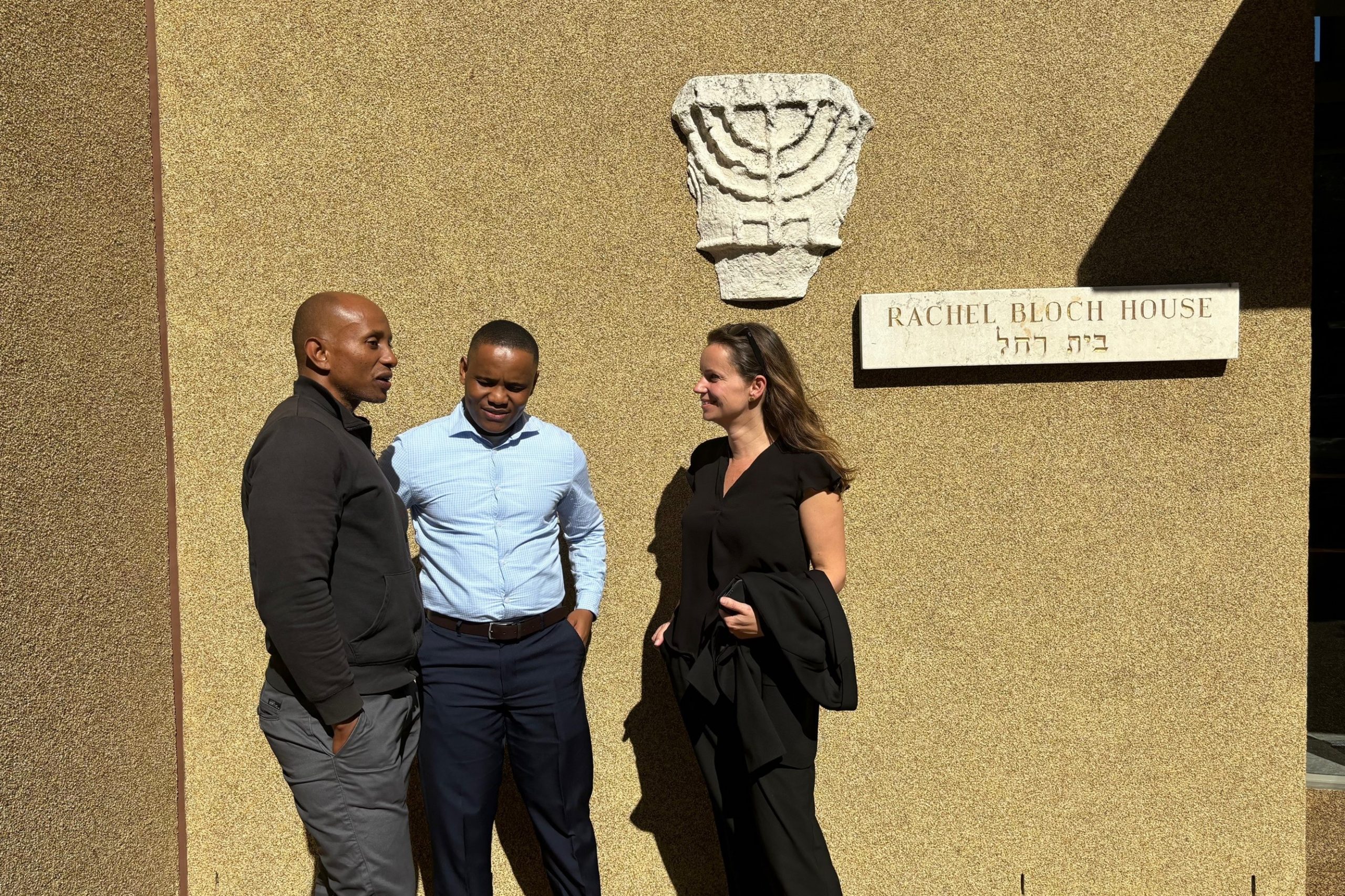
Seminar organized in collaboration with The Kaplan Centre for Jewish Studies at the University of Cape Town and the Johannesburg Holocaust & Genocide Centre.
This event brought together international experts, scholars, and civil society representatives to examine, among other topics, both historical and contemporary forms of antisemitism and xenophobia. Key discussions focused on strategies to combat the spread of hate speech on social media, as well as effective educational methods for addressing these issues.
The seminar is part of the Dynamics of Hate: Local Manifestations of a Global Phenomenon project, led by the senior researcher Vibeke Moe.
2023
International conference
Dynamics of Hate: Local Manifestations of a Global Phenomenon
Oslo, 11th-13th December 2023
First international seminar of the research project Dynamics of Hate: Local Manifestations of a Global Phenomenon, led by the senior researcher Vibeke Moe. This event facilitated the exchange of knowledge by exploring diverse perspectives on hate narratives and their local and global dimensions.
The seminar brought together representatives from the Johannesburg Holocaust and Genocide Centre (JHGC), the Kaplan Centre for Jewish Studies at the University of Cape Town, the Goethe-Institut Johannesburg, the Babyn Yar Holocaust Memorial Center, the Konrad Adenauer Stiftung, the Global Consortium on Bigotry and Hate, and the Norwegian Centre for Holocaust and Minority Studies.
2022
International conference
Present pasts: Historical narratives, Holocaust memory and antisemitic discourse in the Balkans
Oslo, 9th September 2022
This conference gathered international scholars to discuss the impact of historical narratives, Holocaust memory and antisemitic discourse in the Balkans.
Key discussions addressed the intersection between Jewish and Holocaust memory and nationalist ideologies, as well as the long-term effects of the wars of the 1990s and the resurgence of antisemitism in the region.
Hate and Bigotry: View from the South
Johannesburg , 12th-13th December 2022
Fifth conference of the Global Consortium on Hate and Bigotry. The event was hosted by the Johannesburg Holocaust and Genocide Centre and brought together international experts to foster knowledge exchange on the dynamics of hate and bigotry in South Africa while also examining broader global trends.
The event included representatives from the Norwegian Centre for Holocaust and Minority Studies (Norway); the Center for the Study of Genocide and Human Rights at Rutgers University, New Jersey (U.S.); the Johannesburg Holocaust & Genocide Center (South Africa); the Center for Genocide Studies, UNTREF, Buenos Aires (Argentina); the University of Manitoba (Canada); the International Council for Diplomacy and Dialogue (Latvia); and the European Center for Democracy Development (France).
As part of the program, the research-based report Dynamics of Racism, Antisemitism and Xenophobia was launched. The report presents an analysis of racist, antisemitic, and xenophobic content posted on the most widely used social media platforms in South Africa.
2019
International conference
Bigotry and Hate in the U.S.
New Brunswick (New Jersey), 25th-27th April 2019
First conference of the “Global Consortium on Hate and Bigotry”, hosted by the Center for the Study of Genocide and Human Rights at Rutgers University in New Jersey (USA).
The conference brought together international experts and practitioners to build a network dedicated to conducting research and developing tools to counter global trends of bigotry and hate.
The event included representatives from the Norwegian Centre for Holocaust and Minority Studies (HL-Senteret), Oslo (Norway); the University of Manitoba (Canada); the Center for Genocide Studies, UNTREF, Buenos Aires (Argentina); the Center for Holocaust and Genocide Studies, Moscow University of the Humanities (Russia); the Documentation Center of Cambodia, Phnom Penh (Cambodia); the International Expert Forum, Paris (France); the Johannesburg Holocaust and Genocide Centre (South Africa); the Rotary Peace Center, International Christian University, Tokyo (Japan); and the Union des Peuples pour la Paix (Bahrain).
Bigotry and Hate: Local and global perspectives
Oslo, Norway, HL-senteret / 2 – 13 December 2019
The purpose of the second Global Consortium conference was twofold: providing participants with a situated understanding of key issues pertaining to bigotry and hate in a Norwegian/Scandinavian context, as well as offering comparative insight into broader local, national and global trends.
The event included representatives from the Norwegian Centre for Holocaust and Minority Studies (Norway); the Center for the Study of Genocide and Human Rights at Rutgers University, New Jersey (U.S.); the Johannesburg Holocaust & Genocide Center (South Africa); the Center for Genocide Studies, UNTREF, Buenos Aires (Argentina); the University of Manitoba (Canada); International Center for Holocaust and Genocides Studies at Russian State University of the Humanities – RGGU (Russia) and the International Expert Forum, Paris (France).
Related Resources
Find digital tools produced in cooperation with partners and researchers from different regions.
Explore More Tools
Filter all resources based on topics, cases and media types