Course: Citizenship and National Identity
Module 1: Citizenship and National Identity
This module explores the links between citizenship, national identity, and religious identity in shaping belonging and participation.

This module provides an understanding of citizenship and national identity, tracing their historical development and interconnections. It particularly explores the role of religious and ethnic identity in shaping national identity and defining citizenship.
Defining Citizenship
Citizenship refers to the formal relationship between an individual and a state, entailing rights and responsibilities. However, it extends beyond legal definitions to explore how it shapes concepts of belonging and exclusion.
Nationality is a legal bond having as its basis a social fact of attachment, a genuine connection of existence, interest and sentiments, together with the existence of reciprocal rights and duties.
– International court of Justice, Nottebohm Case (1955).
There is often confusion about whether citizenship and nationality are the same and what each term entails.
From an international legal perspective, Alice Edwards identifies two main approaches to understanding these concepts. The first approach sees nationality and citizenship as distinct yet interconnected aspects of state membership. Nationality is defined as the legal bond between an individual and a state, determining their status under international law. Citizenship, in contrast, represents the highest political rights and duties within municipal law. The second approach considers the two terms interchangeable, given their close relationship in terms of rights (see Module 2) and their similar purpose in both international and domestic legal contexts.
From a sociological standpoint, nationality and citizenship are seen as distinct concepts. Nationality is understood as a “collective identity that the people of the nation acquire by identifying with the nation”. It has a broader scope, encompassing aspects such as origin, ethnicity, and social affiliation, factors that citizenship is often not influenced by. However, within a nation-state, certain groups or individuals may not identify with the dominant national identity. While such non-nationals are not inherently citizens, they may acquire citizenship through cultural assimilation, sometimes requiring them to adapt or modify aspects of their original identity. In such cases, citizenship offers at least some level of support and inclusion for non-nationals due to its foundational principle of equality.
This course will use the terms ‘citizenship’ and ‘nationality’ interchangeably, from a rights-based perspective.
Nation-State Formation
The development of nation-states is a complex historical process influenced by political, cultural, and social factors. The modern nation-state first took shape in Europe after the Peace of Westphalia in 1648, which established the foundations of territorial sovereignty and state legitimacy. Over time, this concept evolved to center around a shared national identity, often defined by a common language, culture, and historical narratives. However, globalization, migration, and the presence of multi-ethnic societies challenge the traditional notion of the nation-state and can create tensions as different groups seek recognition or autonomy.
Religious and National Identity
Religion has often played a central role in shaping national identities, influencing customs and laws. While secularization theory may have predicted a decline in religion’s role in public life, that is far from being the case at present. Religious identity continues to play an important role in shaping national identity, and in diverse societies, it can lead to divisions within society as different religious groups navigate their place within national narratives. This dynamic can either foster pluralism and coexistence or fuel tensions over belonging and identity.
It seems to be a part of human identity-building at many social levels and in various contexts to create stories about who “we” and “they” are. Such narratives are often based on religious, ethnic, social, national, or other divides. These narratives may be inclusive or exclusive, positive or negative.
For instance, minority groups may face exclusion, discrimination, and human rights violations, along with hate narratives that target them based on their religious beliefs, nationalities, and gender identities, when a State recognizes the majority’s ethnic and religious identity in a diverse country. These discourses frequently use metaphors, comparisons, and symbols designed to dehumanize or stigmatize particular groups. This majority-minority conflict can also impact minority nationality, as the majority rejects their identity within the national narrative.
One strategy to counter such rhetoric is through counter-narratives. This approach involves presenting stories and messages that directly challenge stereotypes by offering alternative perspectives and promoting inclusion. Hate narratives can be a key driver of group hostility, shaping perceptions and influencing exclusionary attitudes. Understanding these narratives provides insight into how prejudice manifests across different groups, from racial to religious communities.
State Sovereignty and Human Rights
State sovereignty guarantees exclusive authority to enact laws within the borders of the state. However, national legislation may be contrary to international obligations. Universal human rights standards require states to uphold fundamental rights, including the right to nationality and the protection of minorities (see module 2).
The Treaty or Peace of Westphalia (1648) recognised the equality of states and the exclusive right of each state to control its own territory and enact domestic policies, free from external interference by other states. This became the cornerstone of public international law for decades to come. However, two brutal world wars and land conflicts led to the emergence of international human rights law in the 20th century. Human rights came to be recognised as inalienable and inherent to all individuals. This meant that states’ actions now had to be balanced with their obligation to uphold the human rights framework.
The International Human Rights Law (IHRL) framework developed as a legal regime after World War II to protect the inherent rights of individuals against abusive and arbitrary power, primarily exercised by the state. The IHRL framework comprises a range of treaties, conventions, declarations, and customary law designed to safeguard individual dignity and freedoms. Key instruments include the Universal Declaration of Human Rights (1948), which sets a global standard, and treaties such as the International Covenant on Civil and Political Rights (1966) and the International Covenant on Economic, Social and Cultural Rights (1966).
A central principle that runs through this body of law is non-discrimination, which requires states to treat all individuals equally. By ratifying such international instruments, states voluntarily limit aspects of their sovereignty and align domestic laws with international obligations. However, states also reserve the right to make reservations to certain provisions within international instruments, thereby allowing national policies to override specific norms.
Striking a balance between these often conflicting frameworks is a complex and contested undertaking. While the international legal framework is well-established, its practical implementation depends on the effectiveness of international oversight mechanisms, which, often, fall short of holding states accountable. Certain states hold more power than others in the international arena, which also influences and reshapes the development of the international legal order.
Oversight bodies such as the United Nations Human Rights Council, courts such as the ICJ and ICC, ad hoc tribunals, and various regional courts, including the Inter-American Court of Human Rights, the European Court of Human Rights, and the African Court on Human and Peoples’ Rights, monitor the actions of states and individuals. However, these bodies often lack the capacity and mandate for direct enforcement of their norms and must rely largely on international pressure and diplomacy. Additionally, varying state interpretations of certain norms often lead to the prioritisation of national policies over international standards.
For example, the treatment of migrants and refugees has become a particularly contentious area in the relationship between states and the IHRL framework. The absolute character of the principle of non-refoulement under international instruments such as the Convention Against Torture prohibits states from returning individuals to countries where they face a real risk of torture or other forms of ill-treatment. This directly limits sovereign control over immigration policy. Nevertheless, many states continue to deport or ‘push back’ individuals, even at the risk of persecution or statelessness.
The past 80 years have seen significant developments in the field of IHRL. The individual rights has increasingly taken precedence over traditional conceptions of the state and the power it wields. While many challenges remain and continue to be addressed through advocacy and negotiation, the second half of the 20th century marked a decisive shift away from the idea that states possess unlimited sovereignty.
Key Case Presentations
Mass deprivation of nationality or denationalization is not a new phenomenon that we see in the 21st century. For the purpose of this course, we will examine the citizenship determination processes in Assam, India, and the denial of nationality of Rohingya and the situation of other ethnic and religious minorities in Myanmar. The course analyzes how legal frameworks, political dynamics, and historical narratives intersect to shape practices of belonging and exclusion. Key cases in this course illustrate how state-led processes of exclusion can contribute to systemic marginalization of ethnic and religious minorities.
India’s Citizenship Framework
India is a multi-ethnic and multi-religious country where diverse communities have coexisted for centuries. The Indian Constitution defines the nation-state as a secular, democratic republic. The Constitution guarantees equal rights to all citizens regardless of religion, gender, and belief. However, in recent times, religious identity has played an increasing role in policymaking and national narratives. For instance, in Assam, citizenship determination processes have been criticized for their disproportionate impact on Bengali-speaking Muslims. Furthermore, the 2019 amendment to the Citizenship Act has sparked widespread debate and criticism for making religion a criterion for acquiring citizenship, disproportionately affecting Muslims and people of other beliefs excluded from the criteria.
Citizenship Determination Process in Assam, India
Assam, like other Indian states, is ethnically and religiously diverse. Assam has experienced prolonged ethnic conflicts and identity-driven politics, shaping its immigration policies.
The majority population consists of the Assamese community, primarily followers of Hinduism. Islam is the second-largest religion, with the Bengali speaking Muslim community forming a significant portion of Assam’s population.
Assam has experienced prolonged ethnic conflicts and identity-driven politics, shaping its immigration policies. The Assam Movement (1979–1985) led to the Assam Accord, which introduced the concept of “illegal migrants” into India’s citizenship laws.
Assam has used two parallel processes to determine Indian citizenship:
- National Register of Citizens (NRC) – An administrative process that excluded 9 million people from its final 2019 list.
- Foreigner’s Tribunal (FT) – A quasi-judicial process that, as of December 2024, declared around 160,000 people as foreigners.
These processes have sparked concerns about their impact on religious minorities, especially Bengali-speaking Muslims, as well as their effects on women and intergenerational citizenship rights.
The Assam Accord was signed on August 15, 1985, between the Government of India and leaders of the Assam Movement to address the issue of illegal immigration. The movement, which lasted from 1979 to 1985, was driven by concerns over the large influx of migrants, particularly from Bangladesh, and its impact on Assamese identity, resources, and political representation.
Key provisions of the Accord included:
- Detection and deportation of illegal migrants who entered Assam after March 24,
- Granting citizenship to those who arrived between 1 January, 1966 and 24 March 1971, but with voting rights delayed for ten years.
- Full citizenship to persons who entered Assam prior to 1 January, 1966.
- Safeguards for Assamese identity, culture, and economic development
The Accord led to the introduction of S.6A in India’s Citizenship Act which was signed into law via the Citizenship (Amendment) Act, 1985.
Myanmar’s Citizenship & Ethnicity
The 2008 Constitution of Myanmar, created under a military-dominated government, reflects a national vision shaped by ethnic and religious identity. It gives special status and privileges to 135 ethnic groups that are officially recognized and fall into eight broad categories. Communities not included on the list, such as the Rohingya, Indian and Chinese descent are denied legal recognition and full citizenship. Other ethnic groups that may be included within the 135 ethnic groups, such as the Kachin, Chin, Karen have continued to experience marginalization and discrimination. Decades of marginalization, exclusion, and violence have been intensified by this ethnic- based system and national political practice.
Citizenship in Myanmar is linked to ethnic ancestry and ancestral residency before 1823, the start of British colonization according to the 1982 Citizenship Law. The law creates a structured hierarchy of membership by establishing three levels of citizenship: full, associate, and naturalized. The 2008 Constitution reinforces this system, where ethnic identity determines one’s legal status, rights, and political participation.
Marginalization of ethnic and religious minorities in Myanmar
In addition to the official classification of national races, the process of ‘Burmanisation’ has also contributed to the exclusion of certain groups in Myanmar. Being listed as a national race is not sufficient; an ethnic community must also prove its originality as Burmese, which ultimately prioritizes cultural identities associated with Buddhism and the Burmese language.
Myanmar’s National ID cards therefore include information on both ethnic identity, such as Bamar, Karen, Shan, or Mon, and religious identity, such as Buddhist, Christian, or Muslim. To prove ethnic identity, individuals are required to submit ancestral identity documents, a family tree, and household registration records. This process, combined with the disclosure of religious identity, often results in the exclusion of religious minorities within specific ethnic groups.
The Karen community, for example, with its distinct languages, traditions, and cultural practices from the dominant Bamar or Shan communities, is often denied identity documentation due to difficulties in proving ancestral origin. Karens following Christianity and Islam face additional barriers because of their religious affiliation. Newborns are sometimes denied birth certificates, as their parents must present identity documents verifying Burmese origin.
Read more here on the persecution against ethnic and religious minorities in Myanmar.
Denial of Citizenship of Rohingyas in Myanmar
The Rohingya Muslims are a religious and ethnic minority from Rakhine State. The Rohingyas are denied citizenship and remain one of the largest stateless populations in the world.
Despite their long history of habitual residence in the area, the Myanmar government does not recognize them as one of the official “national races”. This community has faced systemic marginalization and state-led discrimination since the 1960s, escalating into widespread violence and mass displacement in subsequent decades.
In 2016 and 2017, violence against the Rohingyas intensified after attacks by a small Rohingya insurgent group. In response, the Myanmar military launched a brutal crackdown involving mass killings, sexual violence, and the destruction of villages. Following this wave of violence, over one million Rohingyas live in Cox’s Bazar refugee camp in Bangladesh, the largest refugee settlement in the world. Today, the Rohingyas remain one of the most persecuted minorities globally, deprived of basic rights and caught in a recurring cycle of statelessness, forced displacement, and persistent discrimination, both within Myanmar and beyond its borders.
The case of the Rohingya is also addressed in the course Genocide & Group Hostility, which explores genocide and its distinction from other forms of mass atrocities.
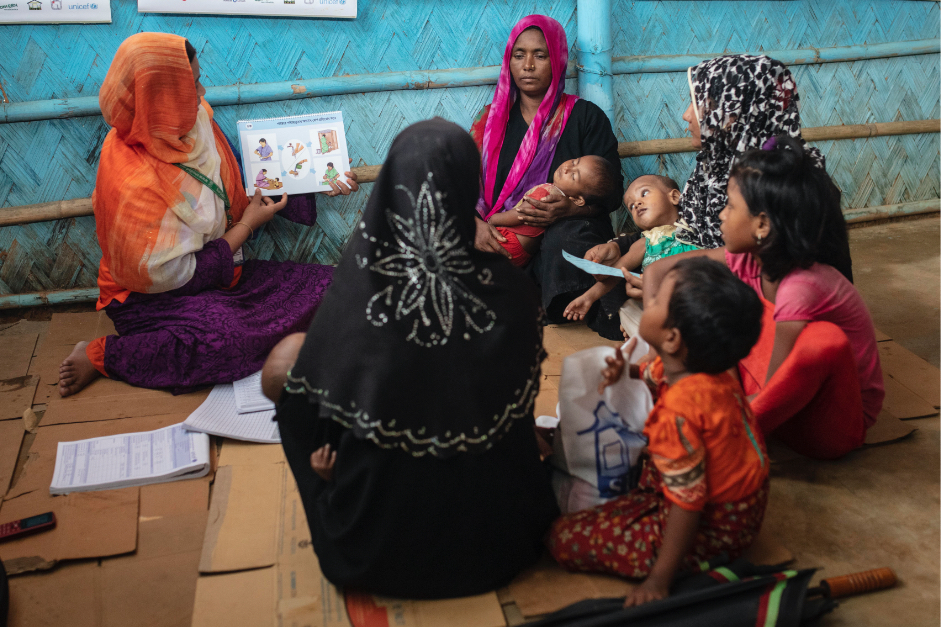
Photo by UNHCR
Ethno-nationalism is a form of nationalism that constructs national identity around shared ethnic, cultural, linguistic, or racial traits rather than civic or territorial affiliation.
Identity politics in both Assam, India, and Myanmar, where the ethnic identity of Muslim minorities, particularly Bengali-speaking Muslims in Assam and the Rohingya in Myanmar, is frequently contested. These groups are often excluded from national belonging due to dominant narratives that portray them as illegal migrants from Bangladesh. In both India and Myanmar, the colonial period facilitated large-scale migration.
Assam, a culturally diverse region, has a contested and complex history of migration and population movement within and across India’s international borders. Its unique geographical location means it shares borders with not only seven other states in eastern India but also two international boundaries— Bangladesh (formerly East Pakistan) and Bhutan. During the colonial period, tribal labourers from Central India were brought to work in Assam’s tea plantations, while educated Bengali Hindus filled administrative roles. Bengali Muslim peasants from areas like Mymensingh and Sylhet (present-day Bangladesh) were encouraged to settle in Lower Assam to cultivate land along the Brahmaputra floodplains. These waves of migration in the 19th and 20th centuries were shaped by kinship ties, persecution, trade, and a largely unregulated riverine border.
Following these migration waves, local Assamese communities began expressing concerns about the scale of migration, particularly after the refugee influx from the 1971 Bangladesh war. They claimed this migration diluted the unique Assamese culture and identity, warning that growing migrant populations could eventually turn the indigenous Assamese into a minority. While there have been multiple contestations over the number of immigrants and foreigners in Assam, no credible empirical survey has been conducted to determine an exact figure. While Assamese ethno-nationalism has been a cornerstone of the state’s politics, multiple attempts to define who is considered “Assamese” have failed.
Similarly, Myanmar shares borders with several Southeast Asian countries, including India and Bangladesh. The majority of the Rohingya population has historically lived in Rakhine State, which borders Bangladesh. The Rohingya are a Muslim ethnic minority in Myanmar, where Buddhism holds special status under the Constitution. The history of the Rohingya is contested. Some view them as descendants of Bengali migrants who arrived during British colonization after the First Anglo- Burmese War in 1824. The Rohingya, however, claim ancestral roots in Rakhine dating back to the 8th century, with increased Muslim settlement in the 16th century. Myanmar authorities deny the existence of a distinct Rohingya identity, instead referring to them as “Bengalis,” implying they are illegal migrants from Bangladesh. By the 1960s, the narrative that most Muslims in Rakhine were illegal Bengali immigrants took root, amid growing emphasis on the protection of “national races” and efforts to identify and deport so-called illegal aliens.
Ethno-nationalism has played a critical role in shaping the political landscapes of both India and Myanmar, driven by concerns over cultural preservation, demographic changes, and sovereignty. However, these complex discourses invite critical reflection on the criteria and limits through which belonging to a nation-state is defined and assessed.
Additional Resources
Nationality
- Edwards, Alice. 2014. “The Meaning of Nationality in International Law in an Era of Human Rights.” In Nationality and Statelessness under International Law, edited by Alice Edwards, and Laura Van Waas, 11–43. Cambridge: Cambridge University Press. https://doi.org/10.1017/CBO9781139506007.002.
- Lachmann R . Nation-State Formation: Power and Culture. In: Janoski T, de Leon C, Misra J, Martin IW, eds. The New Handbook of Political Sociology. Cambridge University Press; 2020:458-483.
- Storm, H. J. (2022). The rise of the nation‐state during the Age of Revolution: revisiting the debate on the roots of nations and nationalism. Nations And Nationalism, 28(4), 1137-1151. doi:10.1111/nana.12857 https://scholarlypublications.universiteitleiden.nl/handle/1887/3443699
- Anderson, Benedict. 2016. Imagined Communities. London, England: Verso Books.
- Allen Buchanan and Margaret Moore (eds) (2003), States, Nations, and Borders: the Ethics of Making Boundaries” Link
- Castles, Stephen, and Alastair Davidson. 2005. Citizenship and Migration: Globalization and the Politics of Belonging. Repr. Basingstoke: Palgrave.
- Young, Iris Marion. 1989. “Polity and Group Difference: A Critique of the Ideal of Universal Citizenship.” Ethics 99 (2): 250–74. https://doi.org/10.1086/293065.
Ethnic, Religious & National Identity
- Shady, S. N. (2021). Territory and the divine: the intersection of religion and national identity. West European Politics, 45(4), 744–766.
- Reynolds, S. G. (2019). National Identity and Religion: an unhealthy mix? The Furrow, 70(4), 241–244. http://www.jstor.org/stable/45210217
- Oommen, T. K. 1997. Citizenship, Nationality, and Ethnicity: Reconciling Competing Identities. Cambridge, Mass: Polity Press.
- Spinner-Halev, Jeff. 1994. The Boundaries of Citizenship: Race, Ethnicity, and Nationality in the Liberal State. Baltimore: Johns Hopkins University Press.
- Soper, J. Christopher, and Joel S. Fetzer. 2018. Religion and Nationalism in Global Perspective. 1st ed. Cambridge University Press. https://doi.org/10.1017/9781316995280.
India
- Antara Dalla, Refugees and Borders in South Asia: The Great Exodus of 1971 (Chapter 3). Routledge.
- Anupama Roy, Introduction: Enframing the Citizen in Contemporary Times in Mapping Citizenship in India, pp. 1- 22 (Oxford University Press, 2010)
- Baruah, Sanjib. 1986. “Immigration, Ethnic Conflict, and Political Turmoil-Assam, 1979-1985.” Asian Survey 26 (11): 1184–1206. https://doi.org/10.1525/as.1986.26.11.01p04306.
- (2013) Citizenship and its Discontents. Cambridge: Harvard University Press.
- Zamindar, Vazira (2007):The Long Partition and the Making of Modern South Asia: Refugees, Boundaries, Histories. New York: Columbia University Press
- Sur, Malini (2021): Jungle Passports: Fences, Mobility, and Citizenship at the Northeast India-Bangladesh Border, Philadelphia: University of Pennsylvania Press.
- Van Schendel, Willem (2004): The Bengal Borderland: Beyond State and nation in South Asia London: Anthem.
- Ghosh, Sahana. 2023. A Thousand Tiny Cuts: Mobility and Security across the Bangladesh‑India Borderlands. Berkeley: University of California Press.
Myanmar
- Haque, Md. Mahbubul. 2017. “Rohingya Ethnic Muslim Minority and the 1982 Citizenship Law in Burma.” Journal of Muslim Minority Affairs 37 (4): 454–69. https://doi.org/10.1080/13602004.2017.1399600.
- Kipgen, Nehginpao. 2019. “The Rohingya Crisis: The Centrality of Identity and Citizenship.” Journal of Muslim Minority Affairs 39 (1): 61–74. https://doi.org/10.1080/13602004.2019.1575019.
- Mukherjee, Kunal. 2019. “The Ethnic Minority Question and Rohingya Crisis in Contemporary Myanmar.” Journal of Muslim Minority Affairs 39 (1): 26–43. https://doi.org/10.1080/13602004.2019.1575021.
- Topich, William J., and Keith A. Leitich. 2013. The History of Myanmar. The Greenwood Histories of the Modern Nations. Santa Barbara, Calif: Greenwood.
Questions for reflection and discussion
- Are there noticeable changes in the way citizenship and national belonging are described in your country? Do you see religious or ethnic identity influencing these discussions?
- Taking into consideration the two cases discussed here, do you think it is possible for a country to protect its sovereignty while still upholding human rights? If so, how can this be achieved?
Exercise
- Identity Map- Group affiliation and Prejudice (https://www.dembra.no/en/undervisningsopplegg/identitetskart-gruppetilhorighet-og-fordommer#implementation)
- Fact, opinion or prejudice (https://www.dembra.no/en/undervisningsopplegg/fakta-mening-eller-fordom)